

Launching a startup project can feel overwhelming when every decision affects your timeline, budget, and team morale. One wrong step can lead to confusion, miscommunication, or costly delays that threaten your project’s success. You need practical steps that help you move from uncertainty to clear control and confident progress.
This guide delivers real-world strategies drawn from proven research on successful project planning. By following these actionable insights, you will avoid common mistakes, clarify expectations, and set your team up for productive collaboration. Discover the key methods that will turn your startup’s vision into steady results any founder can be proud of.
Quick Summary

1. Define Clear Project Goals and Scope
Successful startup projects begin with crystal clear goals and scope - the strategic roadmap that transforms abstract ideas into actionable plans. Defining your project’s boundaries prevents costly misunderstandings and sets the foundation for predictable execution.
Establishing project goals requires a systematic approach that goes beyond surface-level objectives. Your scope must comprehensively outline:
Research indicates that project scope directly influences success rates. Without precise definition, teams risk scope creep - the gradual expansion of project requirements that derails timelines and budgets. By meticulously documenting what is included and excluded, you create a shared understanding among all stakeholders.
Clarity is not just about documentation - it’s about creating a shared vision that everyone can understand and execute.
To define your project scope effectively, conduct thorough stakeholder interviews, document requirements comprehensively, and validate expectations with key decision makers. This approach transforms abstract concepts into concrete, measurable objectives.
Pro tip: Create a one-page project charter that summarizes goals, scope, and key constraints to ensure immediate team alignment.
2. Identify Key Stakeholders and Roles
Successful projects rise or fall based on understanding and engaging the right people at the right time. Stakeholder identification is not just an administrative task - it’s a strategic process that determines your project’s potential for success.
Stakeholders are more than just names on a contact list. They represent a complex network of individuals and groups who can:
Stakeholder involvement throughout the project lifecycle is crucial for sustainable performance. Each stakeholder brings unique perspectives, expectations, and potential challenges that must be carefully mapped and managed.
To effectively identify stakeholders, follow a systematic approach:
Not all stakeholders are created equal - understanding their individual motivations is key to successful project navigation.
Utilize tools like RACI matrices to clearly define responsibilities and expectations for each stakeholder group. This approach prevents misunderstandings and aligns team efforts. Click the link below to read more:
Pro tip: Schedule individual stakeholder interviews early to uncover hidden expectations and potential resistance points before they become project roadblocks.
3. Develop a Realistic Project Timeline
A project timeline is more than just a calendar of events - it’s the strategic blueprint that transforms your startup’s vision into executable reality. Crafting a realistic timeline requires precision technical skills and strategic thinking.
Project timeline development involves several critical components:
Fuzzy PERT management techniques help startups create more accurate time estimates by accounting for variability and uncertainty. This approach moves beyond rigid scheduling toward adaptive planning.
To develop an effective timeline:
A well-designed timeline transforms chaos into coordinated momentum.
Remember that timelines are living documents. Project delivery strategies require continuous monitoring and adjustment as new information emerges.
Pro tip: Add 20% buffer time to your initial timeline estimates to account for unforeseen complexities and maintain team morale.
4. Set Budget and Resource Allocations
Budget and resource allocation is the financial heartbeat of your startup project - the strategic process that transforms limited resources into maximum potential. Successful allocation means doing more with less while maintaining team effectiveness and project momentum.
Resource allocation fundamentals encompass several critical dimensions:
Strategic resource management requires a nuanced approach that balances immediate needs with long-term project objectives. Think of your budget like a sophisticated ecosystem where every dollar and team member plays a crucial interconnected role.
To effectively allocate resources:
Resources are finite. Your job is to make them infinite in their potential.
Develop a dynamic allocation model that adapts to changing project landscapes. Regularly reassess and redistribute resources based on emerging priorities and performance metrics.
Pro tip: Create a contingency fund representing 10-15% of your total budget to address unexpected challenges without derailing project momentum.
5. Choose the Right Project Management Tools
In the fast-paced world of startup project management, your digital toolkit can make or break project success. The right software transforms chaos into coordinated execution enabling your team to work smarter not harder.
Project management technology extends far beyond simple tracking platforms. Modern tools offer sophisticated capabilities that can dramatically enhance team performance:
Project management software selection requires a strategic approach that matches technological capabilities with your specific project requirements. Not all tools are created equal.
Consider these critical evaluation criteria:
The best tool is the one that disappears into your workflow becoming an invisible productivity accelerator.
Emerging technologies like AI are revolutionizing project management tools providing predictive analytics and intelligent resource recommendations. Stay ahead of the curve by selecting platforms that offer cutting-edge capabilities.
Pro tip: Request free trials of three different project management tools and run a small pilot project to determine the most intuitive and effective solution for your team.
6. Establish Communication Protocols
Communication is the lifeblood of successful project management - the invisible thread that connects team members ideas and objectives. Without clear protocols startup teams risk descending into a chaotic communication nightmare.
Communication management fundamentals include creating a structured approach that ensures:
Project communication management requires intentional design that goes beyond basic email exchanges. Think of communication protocols as the operating system for your team’s collaborative intelligence.
Design your communication strategy through these key steps:
Effective communication transforms information into shared understanding.
Different project stages demand different communication intensities. Your protocols should be flexible enough to adapt while maintaining core structural integrity.
Pro tip: Create a one-page communication playbook that outlines preferred channels response times and communication expectations for every team member and stakeholder.
7. Monitor Progress and Adjust Plans
In the dynamic world of startup project management monitoring progress is not a passive activity - it’s an active strategic intervention. Your ability to track performance and pivot quickly can mean the difference between project success and spectacular failure.
Project monitoring essentials encompass a comprehensive approach that includes:
Project control processes transform raw performance data into actionable insights. Think of monitoring as your project’s built-in GPS constantly recalculating the most efficient route.
Implement a robust monitoring strategy through these critical steps:
Progress is not about perfection - it’s about consistent intelligent adaptation.
Successful monitoring requires a balance between detailed tracking and strategic flexibility. Avoid micromanagement while maintaining meaningful oversight.
Pro tip: Schedule weekly 30-minute retrospective meetings where team members can transparently discuss challenges blockers and potential course corrections.
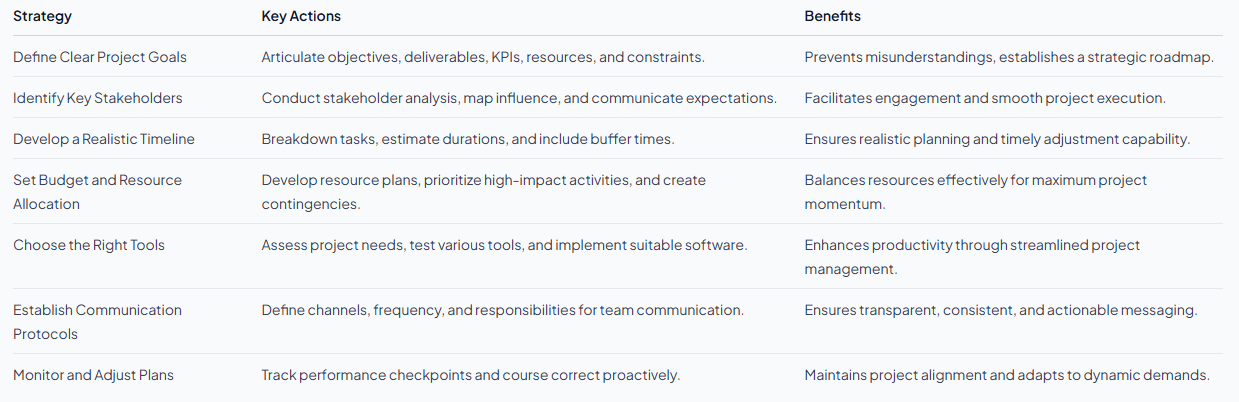
Below is a comprehensive table summarizing the core strategies for effectively managing startup projects as discussed in the article.
Master Your Startup Project Management with Expert Guidance
Facing challenges like defining clear project goals or managing stakeholder roles can make startup projects feel overwhelming. This article highlights the risks of scope creep, the importance of realistic timelines, and how communication protocols are vital to keep projects on track. With so many moving parts, the emotional pressure of keeping your startup’s vision alive and delivering on time calls for proven strategies and professional support.
Take control of your project management journey today. At Fifty1 Consulting, we specialize in education consulting focused on project management, delivery execution, and industry certifications like PMP, PBA, and CSM for technology projects. Our tailored solutions help you master budget allocation, stakeholder engagement, and project monitoring techniques covered in the 7-step checklist. Don’t let uncertainties stall your startup success—explore how our expert guidance can transform your project plans into measurable results. Visit us now at https://fifty1consulting.com and start building your future with confidence.
Frequently Asked Questions
How do I define clear project goals and scope for my startup project?
To define clear project goals and scope, outline your project objectives, deliverables, key performance indicators, resource needs, and time and budget constraints. Conduct stakeholder interviews to align everyone on expectations and document everything in a project charter.
What steps should I take to identify key stakeholders for my project?
Begin by conducting a stakeholder analysis to understand who can influence project outcomes and provide critical resources. Map each stakeholder’s influence and interest levels, categorize them by impact, and create tailored communication strategies for effective engagement.
How can I develop a realistic project timeline that accommodates unexpected challenges?
Break down your project into the smallest possible tasks, estimate realistic time requirements for each, and add buffer time of approximately 20% to handle unforeseen complexities. Regularly review the timeline and adjust as needed throughout the project.
What should I consider when setting budget and resource allocations for my startup project?
Evaluate your project requirements by conducting a skills inventory and strategically mapping available resources. Prioritize high-impact activities and include a contingency fund of about 10-15% of your total budget to address unexpected challenges swiftly.
What features should I look for in a project management tool?
Select a project management tool that offers real-time collaboration, advanced reporting capabilities, and effective resource allocation tracking. Ensure it meets your project complexity, team size, and integration requirements to streamline your workflow.
How do I establish effective communication protocols to keep my team aligned?
Create structured communication protocols that define preferred channels, response times, and meeting schedules. Develop a one-page communication playbook to ensure everyone knows their responsibilities and expectations for information sharing throughout the project.
Recommended:


