

Global project delivery is changing faster than ever, and the traditional playbook no longer keeps pace. For mid-level managers in worldwide technology firms, keeping teams motivated while adapting to AI integration and shifting generational expectations is becoming a daily challenge. This article highlights the newest project management trends for 2026, including how hybrid models, situational leadership, and essential power skills will redefine your role and sharpen your competitive edge.
Key Takeaways:

What Defines Project Management in 2026
Project management in 2026 emerges as a dynamic, technology-infused discipline that transcends traditional planning boundaries. The profession is no longer about rigid schedules and linear progression, but about creating adaptive, value-driven ecosystems that respond to rapid technological and cultural shifts.
The core transformation centers on three critical dimensions:
Hybrid delivery models now dominate the landscape, combining traditional methodologies with agile approaches tailored to specific project requirements. This means project managers must become sophisticated orchestrators who can dynamically adjust strategies based on complex stakeholder needs.
Data-driven decision making transforms from a competitive advantage to an absolute necessity. Project leaders will leverage advanced analytics, AI-powered insights, and real-time performance metrics to make faster, more accurate strategic choices. The emphasis shifts from executing tasks to realizing meaningful organizational benefits and maintaining strategic portfolio alignment.
Technological Fluency becomes a mandatory skill set. Project managers must understand not just project management principles, but also emerging technologies like machine learning, cloud computing, and collaborative platforms. The ability to integrate these technologies seamlessly into project workflows will distinguish top performers.

Pro tip: Invest in continuous learning platforms that help you stay current with AI and emerging project management technologies.
AI, Automation, and Data-Driven Decision Making
The landscape of project management is rapidly transforming through the strategic integration of artificial intelligence and advanced automation technologies. In 2026, these tools are no longer experimental novelties but essential infrastructure that fundamentally reshapes how projects are conceptualized, executed, and monitored.
Generative AI technologies are revolutionizing project management by enabling unprecedented levels of predictive analytics and strategic optimization. These intelligent systems can now:
Data-driven decision making shifts from a competitive advantage to an absolute operational requirement. Project managers now leverage sophisticated machine learning algorithms that can process complex datasets, providing real-time insights that were previously impossible to extract. This means faster risk identification, more accurate resource allocation, and significantly improved strategic planning capabilities.
The human role in this AI-enhanced environment becomes increasingly strategic. Rather than being replaced, project managers are elevated to become sophisticated orchestrators who leverage AI tools to amplify their leadership and creative problem-solving capabilities. The most successful professionals will be those who can effectively integrate technological capabilities with nuanced human judgment.
AI won’t replace project managers - but project managers who use AI will replace those who don’t.
Technological Integration demands a new set of skills. Project managers must develop proficiency in:
Pro tip: Invest in continuous AI literacy training and experiment with multiple AI project management tools to develop adaptive technological skills.
Hybrid Methodologies and Agile Expansion
The project management landscape in 2026 demands unprecedented flexibility, with organizations moving beyond rigid, single-methodology approaches. Hybrid methodological frameworks are transforming how teams conceptualize, plan, and execute complex initiatives across diverse business environments.
This evolutionary approach combines the best elements of traditional and agile methodologies, creating adaptive strategies that can rapidly respond to changing project requirements. Key characteristics of these hybrid models include:
Successful hybrid approaches require project managers to develop advanced skills in method integration and organizational change management. They must become sophisticated translators who can seamlessly blend structured planning with iterative, responsive execution strategies.
Hybrid methodologies are not about choosing between approaches, but creating custom frameworks that optimize project delivery.
The emerging hybrid model emphasizes:
Understanding when and how to apply different methodological principles becomes a critical competitive advantage. Project managers must develop nuanced judgment about which techniques work best in specific contexts, moving beyond one-size-fits-all solutions.
Here’s how traditional, agile, and hybrid methodologies contrast in project management for 2026:
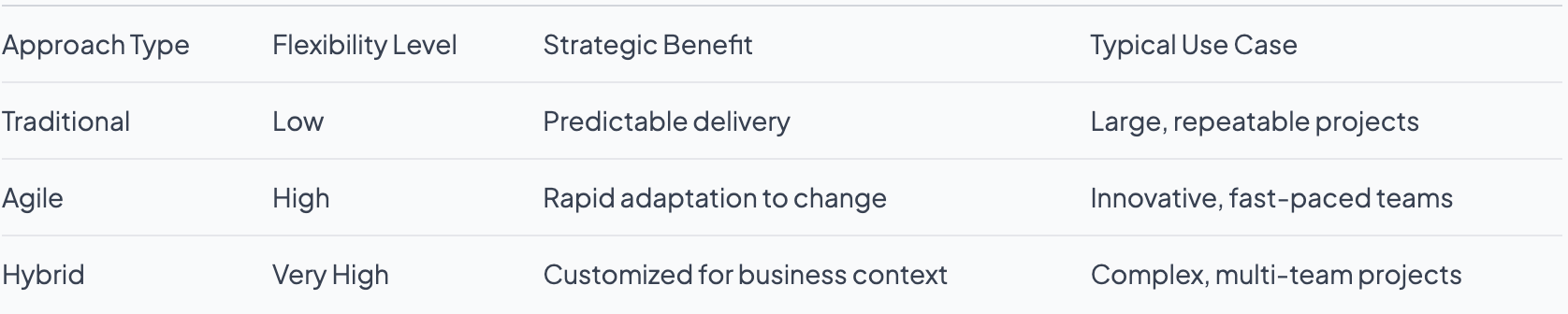
Approach TypeFlexibility LevelStrategic BenefitTypical Use CaseTraditionalLowPredictable deliveryLarge, repeatable projectsAgileHighRapid adaptation to changeInnovative, fast-paced teamsHybridVery HighCustomized for business contextComplex, multi-team projects
Organizational Adaptability emerges as the core competency. Teams that can quickly pivot between structured and adaptive approaches will outperform more rigid competitors. This requires not just technical skills, but a fundamental mindset of strategic flexibility.

Pro tip: Create a methodology selection matrix that maps project characteristics to optimal management approaches, enabling faster and more intelligent project strategy decisions.
Essential Power Skills for Project Managers
The rapidly evolving project management landscape demands a transformative approach to professional development. Practical project delivery strategies now require project managers to cultivate a sophisticated blend of technological fluency, emotional intelligence, and strategic thinking. Read Here: Practical project delivery strategies
Essential power skills for project managers in 2026 represent a holistic combination of technical proficiency and human-centric capabilities:
Technological proficiency now extends far beyond traditional project management software. Modern project managers must develop sophisticated skills in data interpretation, machine learning collaboration, and strategic technology implementation. This requires a mindset of continuous learning and adaptive capability.
Technical skills get you hired, but human skills determine your long-term success.
The most successful project managers will distinguish themselves through:
Communication emerges as a critical differentiator. Project managers must translate complex technological concepts into accessible language, bridging gaps between technical teams and non-technical stakeholders. This skill demands intellectual flexibility, active listening, and nuanced communication strategies.
Technological Fluency becomes as important as traditional management skills. Understanding emerging technologies, their potential applications, and their strategic implications separates exceptional project managers from average performers.
This table summarizes key power skills and their impact on modern project managers:

Pro tip: Develop a personal learning roadmap that dedicates at least 5 hours monthly to emerging technology and cross-disciplinary skill development.
New PMO Roles and Delivery Governance
The Project Management Office (PMO) undergoes a radical transformation by 2026, evolving from an administrative oversight function to a strategic organizational enabler. Delivery governance models now demand sophisticated integration of technological insights, strategic alignment, and adaptive decision-making mechanisms.
The emerging PMO landscape encompasses several critical evolutionary dimensions:
PMO professionals must now develop a hybrid skill set that combines traditional project management expertise with advanced technological literacy. This means understanding not just project execution, but how individual initiatives connect to broader strategic objectives and can be dynamically adjusted based on real-time insights.
PMOs are no longer administrative units - they are strategic transformation engines.
Key responsibilities of next-generation PMO roles include:
The role requires a sophisticated blend of technological understanding, strategic thinking, and human-centric leadership. PMO professionals will act as translators between technological capabilities and organizational strategy, ensuring that project investments directly contribute to business growth and innovation.
Technological Governance becomes a core competency. This involves not just managing project technologies, but understanding their strategic implications, potential risks, and transformative possibilities across the entire organizational ecosystem.
Pro tip: Develop a continuous learning approach that allocates dedicated time for exploring emerging technologies and their potential strategic applications.
Common Pitfalls and Skill Gaps to Avoid
Project management in 2026 demands unprecedented strategic awareness and technological adaptability. Skill gaps in project delivery represent critical vulnerabilities that can derail even the most sophisticated organizational initiatives.
The most significant performance-limiting skill gaps include:
Over dependence on technological tools without nuanced human judgment creates substantial organizational risks. Project managers must develop a sophisticated approach that balances technological insights with contextual understanding, stakeholder collaboration, and strategic thinking.
Technology amplifies human capabilities - it does not replace critical thinking.
Critical pitfalls that project managers must proactively mitigate include:
The most dangerous skill gaps emerge from assuming technological tools can replace strategic human capabilities. Successful project managers will distinguish themselves by developing holistic perspectives that integrate technological literacy with emotional intelligence and strategic vision.
Adaptive Intelligence becomes the ultimate competitive differentiator. This means developing the ability to rapidly learn, unlearn, and relearn in response to technological and organizational shifts.
Pro tip: Conduct quarterly self-assessments targeting technological skills gaps and develop targeted learning plans to continuously expand your professional capabilities.
Master the Power Skills and AI Impact Shaping Project Management in 2026
The future of project management demands more than familiarity with traditional tools. As the article highlights, challenges like AI integration, hybrid methodologies, and adaptive intelligence are reshaping project delivery and leadership roles. Many project managers struggle with technological myopia and strategic disconnection, risking missed opportunities in predictive analytics and dynamic governance. Developing a strong blend of AI literacy, emotional agility, and advanced communication skills is no longer optional it is essential for staying competitive in an evolving landscape.

At Fifty1 Consulting, we specialize in empowering project professionals to close critical skill gaps through targeted education consulting on project management certifications such as PMP, PBA, and CSM. Our approach emphasizes technology delivery projects and evolving industry trends so you can confidently integrate AI tools and hybrid methodologies while maintaining strong human leadership. Take control of your career growth and position yourself as a strategic transformation leader by exploring our expert guidance and tailored learning solutions today. Visit Fifty1 Consulting now to start mastering the skills every modern project manager needs to thrive.
Frequently Asked Questions
What are the key power skills needed for project managers in 2026?
Project managers in 2026 need to develop essential power skills such as adaptive intelligence, emotional agility, strategic communication, cross-functional collaboration, and ethical technology integration to effectively manage projects in a rapidly changing environment.
How does AI impact project management in 2026?
AI transforms project management by providing predictive analytics, optimizing resource allocation, automating routine tasks, and enhancing decision-making processes, allowing project managers to elevate their strategic roles rather than being replaced by technology.
What is the significance of hybrid methodologies in project management?
Hybrid methodologies in project management combine traditional and agile approaches, allowing teams to adapt quickly to changing project requirements and deliver customized solutions based on specific project contexts.
Project managers can avoid common pitfalls by continuously developing their technological literacy, ensuring alignment of project outputs with organizational objectives, fostering cross-functional collaboration, and emphasizing the importance of benefits realization.
Recommended:


