

Managing large-scale projects in fast-paced technology firms can often feel like an endless cycle of competing priorities and shifting expectations. For project managers eager to deliver consistent, high-quality outcomes, understanding centralized project management standards is a major competitive advantage. This overview clarifies the different PMO types, core functions, and key certification paths that give technology professionals the strategic skills needed to lead with confidence in any global organization.
Key Takeaways
PMO Definition and Key Concepts
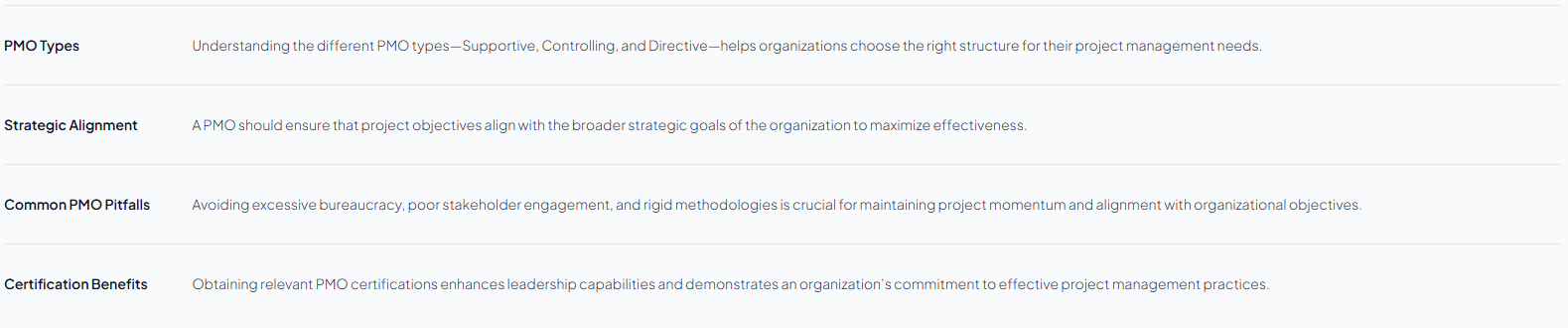
A Project Management Office (PMO) represents a strategic organizational unit designed to standardize and optimize project management practices across an enterprise. Centralized project management standards provide critical infrastructure for consistent project delivery and performance tracking.
PMOs typically serve three primary functional models:
The core objectives of a PMO include:
Organizational Impact varies significantly based on the PMO’s operational approach. Centralized departments support efficient project management by creating standardized processes that align individual projects with broader strategic goals.
Pro tip: Successful PMO implementation requires executive sponsorship and a clear understanding of organizational project management maturity levels.

Major PMO Types and Distinctions
Project Management Offices exhibit remarkable complexity and diversity, with numerous organizational typologies emerging across different business contexts. Understanding these variations is crucial for implementing an effective project management strategy.
Three primary PMO types dominate organizational landscapes:
Project management structures demonstrate significant variability depending on organizational complexity, maturity, and strategic objectives. The selection of a specific PMO type requires careful analysis of an organization’s unique project management needs and existing infrastructure.
Key differentiators among PMO types include:
Organizational Maturity plays a critical role in determining the most appropriate PMO structure. Younger or less experienced organizations might begin with a supportive PMO, while more sophisticated enterprises can implement directive or enterprise-wide project management frameworks.
Here’s a comparison of PMO types and their strategic advantages:

Pro tip: Conduct a comprehensive organizational assessment before selecting a PMO type to ensure alignment with your strategic project management goals.
Core Functions in Technology Projects
In technology-driven environments, Project Management Offices play a critical role in delivering successful outcomes. PMO functions emphasize control and standardization for managing complex technological project landscapes.
Core technological PMO functions include:
The PMO serves as a critical intermediary between technical teams and strategic leadership, translating complex technological requirements into actionable project frameworks. Successful implementation requires deep understanding of both technological capabilities and organizational strategic objectives.
Technology project PMOs must balance several key responsibilities:
Technology Infrastructure demands sophisticated PMO approaches that can adapt to rapid technological changes and evolving project management methodologies. Flexibility and continuous learning remain paramount in maintaining effective project delivery systems.

Pro tip: Develop a dynamic PMO framework that can quickly pivot between different technological project management approaches.
Roles and Responsibilities Within PMO
Project Management Offices require a sophisticated ecosystem of professionals who collaborate to ensure seamless project delivery. The complex landscape of roles demands strategic coordination and specialized expertise across multiple dimensions.
Key roles within a PMO typically include:
Each role carries unique responsibilities that contribute to the broader organizational project management strategy. The PMO team functions like an integrated system, with each professional playing a critical part in maintaining project health and driving strategic objectives.
Responsibility clusters for PMO professionals include:
Organizational Integration requires PMO professionals to demonstrate exceptional communication skills, technical understanding, and strategic thinking. Successful team members must navigate complex interpersonal dynamics while maintaining rigorous professional standards.
Pro tip: Develop a robust cross-training program that enables PMO team members to understand multiple functional roles and perspectives.
PMO Certification Requirements and Benefits
Project Management Professional certifications represent critical credentials for advancing PMO leadership capabilities. PMO certification demonstrates strategic value delivery and organizational effectiveness in modern technology environments.
Top PMO certifications include:
Certification requirements typically encompass:
Professional Credentials validate an individual’s capability to design, implement, and manage complex project management infrastructures. These certifications demonstrate technical competence and strategic thinking beyond traditional project management roles.
Pro tip: Select certifications aligned with your specific organizational context and career development goals.
Common Mistakes and What to Avoid
Project Management Offices frequently encounter predictable pitfalls that can significantly undermine their effectiveness and strategic value. Understanding these common mistakes is crucial for developing robust project management frameworks.
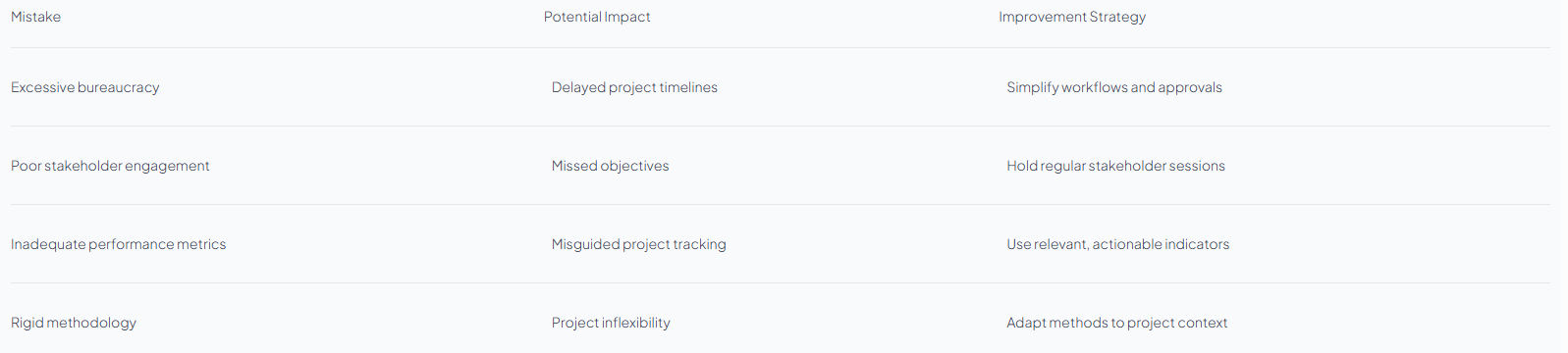
Key mistakes PMO leaders must avoid include:
Most critical areas of potential PMO failure involve:
Organizational Resilience requires PMO leaders to remain flexible, continuously learn, and proactively address potential systemic weaknesses. Successful PMOs recognize that their primary value lies in enabling project success, not creating administrative barriers.
Below is a summary of common PMO mistakes and how to address them:
Pro tip: Conduct quarterly comprehensive reviews of PMO processes, actively seeking feedback from project teams and stakeholders to identify and eliminate potential inefficiencies.
Unlock the Full Potential of Your PMO in Technology Projects
Managing a Project Management Office in complex technology environments can be challenging. This article highlights common pain points like achieving strategic alignment, optimizing resources, and adapting to rapid changes. If you struggle with excessive bureaucracy, inadequate performance tracking, or rigid methodology enforcement in your PMO, you are not alone. The key to overcoming these challenges lies in adopting flexible, well-informed practices supported by industry certifications and expert guidance.

Take control of your PMO’s impact by partnering with Fifty1 Consulting. We specialize in education consulting around project management, delivery execution, and technology-focused certifications such as PMP and PMI-PMOCP. Our tailored solutions help your PMO implement standardized frameworks and improve risk management while maintaining the agility needed for technology projects. Visit our main page to learn how you can transform your PMO today. Don’t wait to enhance your project delivery success with proven strategies and expert support.
Frequently Asked Questions
What is a Project Management Office (PMO)?
A Project Management Office (PMO) is a strategic organizational unit that standardizes and optimizes project management practices across an enterprise, providing the infrastructure needed for consistent project delivery and performance tracking.
What are the main types of PMOs and their differences?
The main types of PMOs include the Enterprise PMO, which aligns projects with organizational strategy; Departmental PMO, which supports specific business units; and Project-level PMO, which governs individual projects. Each type varies in scope, strategic benefit, and challenges in implementation.
How does a PMO impact technology projects?
A PMO significantly impacts technology projects by ensuring strategic alignment, managing resources, tracking performance metrics, and identifying risks. It acts as a bridge between technical teams and organizational leadership, facilitating communication and effective project execution.
What are common mistakes to avoid when establishing a PMO?
Common mistakes include creating excessive bureaucracy, failing to engage stakeholders, using inadequate performance metrics, enforcing rigid methodologies, and lacking adaptability. Avoiding these pitfalls can enhance the PMO’s effectiveness and strategic value.
Recommended:


