
Why choose PMI certifications for career growth in 2026
Project management professionals with PMP certification earn a median salary 24% higher than their non-certified peers, and nearly two-thirds report regular compensation increases. If you’ve wondered whether PMI certifications truly accelerate your career, the data speaks clearly. This article examines the tangible benefits, rising global demand, and strategic advantages PMI certifications deliver for technology delivery leaders and project management professionals seeking meaningful career advancement.
Key takeaways:
Salary advantage: PMI certified professionals in the US earn a median $135,000, 24% above non-certified peers.
Compensation growth: Nearly two-thirds of PMP holders across 21 countries reported compensation increases in recent surveys.
Future demand: Up to 30 million additional skilled project professionals will be needed globally by 2035.
Career validation: PMP certification demonstrates mastery of essential project management competencies and experience.
What are PMI certifications and why do they matter?
PMI stands for Project Management Institute, a global professional organization that offers industry-recognized credentials for project managers. The most prominent is the Project Management Professional (PMP) certification, a globally recognized certification validating experience and competency in leading and directing projects.
PMI certifications matter because they establish a trusted standard that employers worldwide recognize. Organizations seeking skilled project managers rely on PMI credentials to verify that candidates possess both theoretical knowledge and practical experience. Unlike training programs that only confirm attendance, PMI certifications require passing rigorous exams and demonstrating documented project leadership.
To earn PMP certification, candidates must meet specific requirements:
- A four-year degree with 36 months of project management experience, or a high school diploma with 60 months of experience
- 35 hours of formal project management education
- Successful completion of a comprehensive 180-question exam
- Agreement to uphold PMI's professional code of ethics
This credentialing process validates your mastery of project management principles across initiating, planning, executing, monitoring, and closing projects. The exam tests your ability to apply these principles in real situations, not just memorize definitions.
Read more:

PMI offers additional certifications beyond PMP, including Certified Associate in Project Management (CAPM) for those earlier in their careers, Program Management Professional (PgMP) for managing multiple related projects, and specialized credentials for business analysis and agile methodologies. Each serves different career stages and focus areas, but PMP remains the gold standard for experienced project managers.
The PMI certification benefits survey consistently demonstrates how these credentials translate into measurable career advantages.
The career and salary benefits of PMI certifications
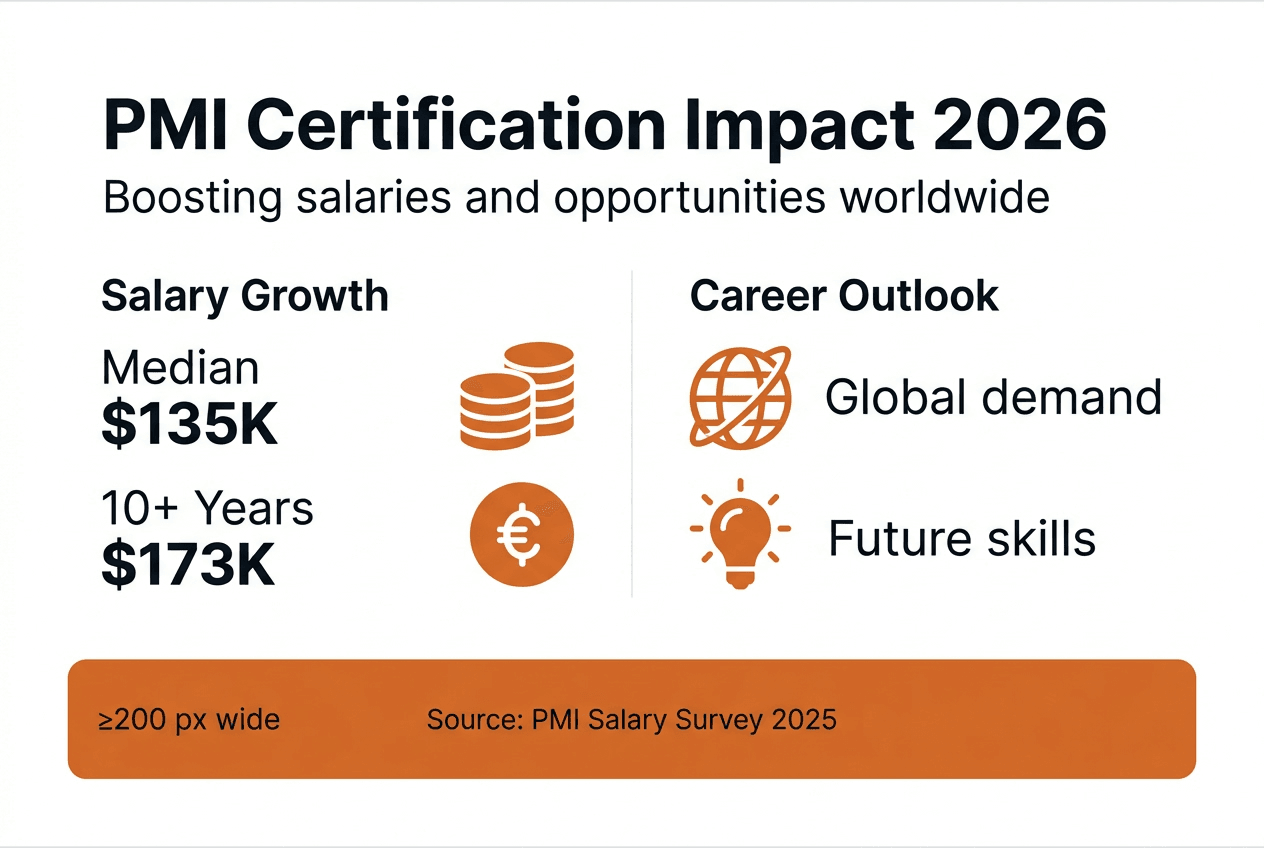
The financial case for PMI certification is compelling. PMP holders in the US earn a median salary of $135,000, which represents a 24% premium over non-certified project managers. This salary advantage exists across industries and experience levels.
The earning potential grows substantially with experience. Professionals with 10+ years as PMP earn a median $173,000 compared to $123,000 for those with under five years of PMP certification. This $50,000 difference demonstrates how certification combined with proven delivery creates compounding career value.
Global compensation trends reinforce these findings. Nearly two-thirds of PMP certified professionals across 21 countries reported compensation increases, showing that the certification delivers financial returns regardless of geography.

Beyond salary, PMI certification unlocks additional career benefits:
- Enhanced credibility with executive leadership and stakeholders
- Priority consideration for senior project and program roles
- Greater job security during economic uncertainty
- Access to exclusive PMI professional networks and resources
- Improved ability to lead cross-functional teams effectively
Pro Tip: When negotiating your next role, reference the PMP certification salary benefits data to justify compensation expectations. Employers understand the market value of certified professionals and expect to pay competitively.
Read more:
PMP certification salary benefits
The 2025 PMI salary survey provides additional benchmarks you can use during compensation discussions. This data-driven approach removes guesswork and establishes clear market positioning for your skills.
How PMI certifications position you for the future of project management
The demand for skilled project managers is accelerating globally. Up to 30 million more skilled project professionals will be needed globally by 2035, creating unprecedented opportunities for certified professionals. Organizations across every sector face increasingly complex projects requiring proven leadership capabilities.
“Organizations continue to invest in project management talent as a strategic priority, recognizing that certified professionals bring consistency and excellence to delivery execution even during periods of economic volatility.”
PMI certification prepares you for future project management challenges in three critical ways:
- Adaptable methodology expertise – You gain fluency across predictive, agile, and hybrid approaches, enabling you to match methodologies to project needs rather than forcing projects into rigid frameworks.
- Strategic alignment capabilities – The certification emphasizes connecting project outcomes to business objectives, a skill that becomes more valuable as organizations demand clear ROI from every initiative.
- Risk and stakeholder management – You develop systematic approaches to identifying threats, managing uncertainties, and keeping diverse stakeholder groups aligned throughout delivery.
This future-focused skill set explains why PMI certification serves as career insurance during uncertain times. While organizations reduce headcount in some areas, they protect and invest in professionals who can deliver complex initiatives successfully. Your certification signals that you belong in this protected category.
The certification also positions you to capitalize on emerging project management demand trends, including digital transformation initiatives, cloud migrations, AI implementation projects, and sustainability programs. These high-value projects require experienced leadership that can navigate technical complexity while managing organizational change.
The project management workforce forecast indicates sustained growth across technology, healthcare, finance, and infrastructure sectors. PMI certification opens doors across all these industries, creating career flexibility that non-certified professionals lack.
Read more:
Project management demand trends
Comparing PMI certifications to other project management credentials
Several project management certifications exist beyond PMI offerings. Understanding their differences helps you choose the credential that best serves your career goals.

PMP certification stands out globally due to its rigorous standards and comprehensive coverage of project management. While PRINCE2 enjoys popularity in government sectors and CSM serves agile practitioners well, PMP’s broad recognition makes it the most versatile credential for technology leaders managing diverse project types.
Pro Tip: Align your certification choice with your five-year career vision. If you plan to lead enterprise initiatives across methodologies, PMP provides the strongest foundation. If you’re focused exclusively on agile software delivery, consider combining PMP with agile-specific credentials.
Factors to consider when selecting your certification path:
- ndustry expectations – Research which credentials your target employers value most
- Experience requirements – Ensure you meet eligibility criteria before investing study time
- Exam difficulty and pass rates – Understand the commitment required for success
- Ongoing maintenance costs – Factor in renewal fees and continuing education requirements
- Career mobility – Choose credentials recognized beyond your current geographic region
For technology delivery leaders, PMI’s global recognition proves especially valuable when managing distributed teams or pursuing international opportunities. Your certification carries consistent meaning whether you’re leading projects in San Francisco, Singapore, or Stockholm.
Explore PMP exam preparation tips and PMP exam resources to understand what successful preparation looks like. You can also review project portfolio certification comparison details for higher-level credentials you might pursue after establishing your PMP foundation.
Read more:
Project portfolio certification comparison
The PMI certification comparison data shows that PMP continues to command the highest salary premiums across comparable certifications, validating its position as the industry standard.
Explore PMI certification support with Fifty1 Consulting
Earning your PMI certification represents a significant career investment, and having expert guidance accelerates your path to success. Fifty1 Consulting specializes in helping technology delivery leaders and project management professionals prepare for and pass PMI certification exams on their first attempt.

Our comprehensive preparation programs combine structured study plans, practice exams, and personalized coaching to address your specific knowledge gaps. We focus on technology delivery contexts, ensuring examples and scenarios match the projects you actually manage.
Explore our certification preparation licenses to find the support level that fits your learning style and schedule. Whether you prefer self-paced study with expert resources or interactive coaching sessions, we provide proven approaches that work for busy professionals.
FAQ
What is PMP certification and who should pursue it?
PMP certification validates your ability to lead and direct projects using established methodologies and best practices. Experienced project managers with at least three years of documented project leadership should pursue PMP to formalize their expertise and gain market recognition. Technology delivery leaders managing complex initiatives benefit particularly from the credential’s comprehensive framework.
How long does it take to prepare for a PMI certification exam?
Most professionals require 60 to 120 hours of focused study spread over two to four months. Your preparation timeline depends on your current project management knowledge, learning style, and available study time each week. Review the PMP exam preparation timeline for detailed guidance on structuring your study plan.
What benefits can technology leaders expect after earning PMI certifications?
Technology leaders gain enhanced credibility with executive stakeholders, improved frameworks for managing technical complexity, and stronger risk mitigation capabilities. You’ll deliver projects more consistently while building the strategic perspective needed for senior leadership roles. The technology leader certification benefits extend beyond individual projects to program and portfolio management capabilities.
How does PMI certification impact salary growth over time?
Salary grows significantly with PMP experience, reaching $173,000 median after 10+ years compared to $123,000 for professionals with under five years of certification. Experience combined with certification creates compounding value as you build a track record of successful delivery. Employers pay premium compensation for proven performers with formal credentials. Visit our blog home for additional PMI salary impact data and career growth resources.
Recommended:
- 7 Key Benefits of PMP Certification for Tech Managers
- How to Prepare for the PMP Exam for Project Success
- Project Management Trends 2026: Power Skills and AI Impact
- What Is Project Management: Impact on IT Delivery


