

TL;DR:
You’re three sprints into a critical product launch. A senior engineer leaves. Nobody can find the architecture decisions. The new hire is guessing. Sound familiar? This scenario plays out constantly in tech companies, and the culprit is almost never the technology itself. It’s the missing paper trail. Project documentation enhances transparency, keeps stakeholders updated on changes, and improves communication across every team. Yet most tech teams treat docs like a chore they’ll get to “later.” This guide breaks down why documentation is a strategic asset, not an afterthought, and gives you actionable strategies to make it work for your projects.
Key Takeaways

The true impact of project documentation
Let’s be honest. When someone says “project documentation,” half the room mentally checks out. It sounds like busywork. But here’s the thing: missing or poor documentation is one of the most expensive mistakes a tech team can make. Think of it like the electrical wiring in a building. You don’t see it, but the moment it’s wrong, everything stops working.
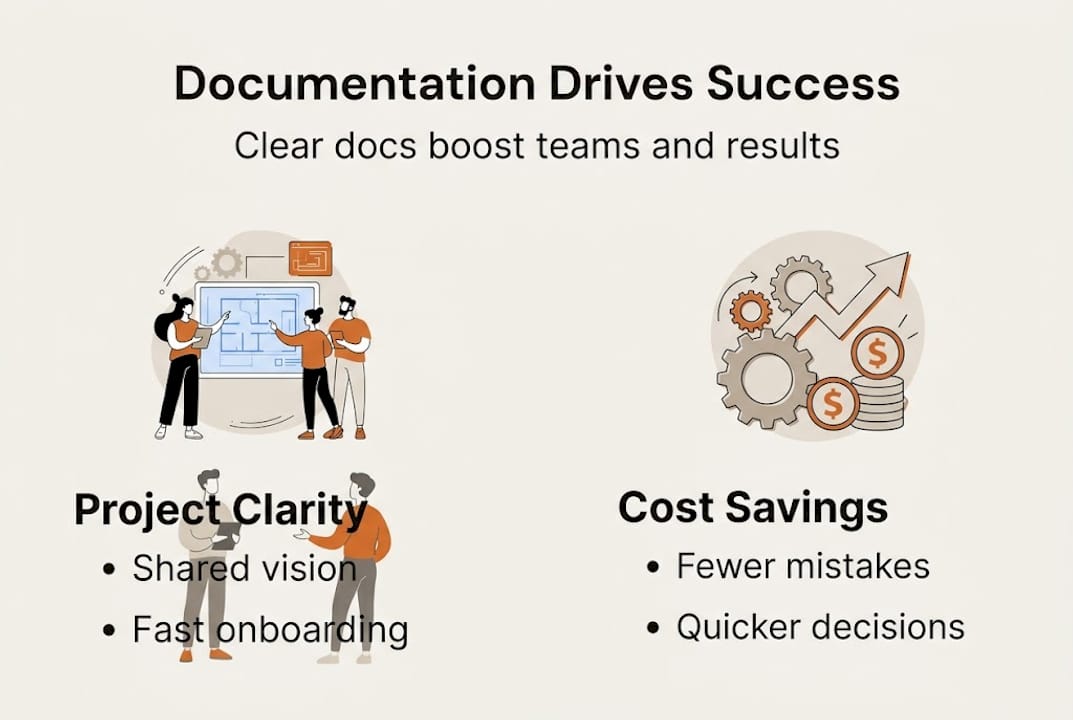
Project documentation enhances transparency, keeps stakeholders updated on changes, and improves communication among team members. That’s not a soft benefit. That’s the difference between a project that delivers and one that spirals into scope creep, rework, and finger-pointing.
Here’s what strong documentation actually gives your team:
Common pain points when documentation is missing or weak include:
“Documentation is not just a record of what happened. It’s the shared understanding that makes future decisions possible.”
For tech project stakeholders, the goal isn’t to produce a library of documents nobody reads. It’s to build a workflow guide for tech success that keeps the right people informed at the right time. When documentation is treated as a communication tool rather than a compliance task, teams move faster, not slower.
The bottom line: poor documentation doesn’t just slow you down. It creates compounding costs across every phase of the project lifecycle.
How documentation drives project success (with data)
Opinions are great. Data is better. Let’s look at what the numbers actually say about documentation’s impact on tech project outcomes.


According to the State of Docs 2025, 90% of users consider documentation important in purchase decisions, and docs directly influence conversion, activation, retention, and customer satisfaction. That’s not just a developer concern. That’s a business outcome concern.
For internal tech projects, the data tells a similar story. Teams that maintain living, accurate documentation see fewer production incidents, faster resolution times, and stronger cross-functional alignment. When your runbooks are current and your architecture decision records (ADRs) are accessible, your team spends less time firefighting and more time building.
Here’s what you should be tracking to measure documentation’s real value:
Understanding what is project management at its core means recognizing that documentation is a core delivery mechanism, not a side activity. Teams that invest in improving document productivity consistently outperform those that treat docs as optional.
The data is clear. Documentation isn’t overhead. It’s leverage.
Balancing documentation with Agile and evolving practices
Here’s where it gets interesting. Agile’s Manifesto famously prioritizes working software over comprehensive documentation. Many teams took that as permission to skip docs entirely. That was a mistake.
Poor docs increase costs and defects in software projects. Agile doesn’t say “don’t document.” It says don’t over-document things that don’t add value. There’s a big difference.

Modern teams are solving this with smarter approaches:
Not sure what to document? Start with your Definition of Done. If a feature isn’t documented, it isn’t done. That single rule changes team behavior fast.
Pro Tip: Don’t wait until the end of a sprint to write docs. Build documentation tasks directly into your sprint backlog. If it’s not in the backlog, it won’t happen.
For teams navigating why Agile matters for tech delivery, the key is building a communication plan for Agile that includes documentation as a first-class activity. Explore tools for project documentation to find the right fit for your team’s workflow.
Best practices: Actionable documentation strategies for tech teams
Okay, let’s get practical. Here’s what actually works for tech project stakeholders who want documentation that people use, not documentation that collects digital dust.
Essential documentation types every tech project needs:
How to keep documentation alive and useful:
Docs-as-code, living docs, and Definition of Done ensure clarity and alignment for tech stakeholders. These aren’t just buzzwords. They’re the practices that separate teams that deliver from teams that scramble.
Leverage AI and automation:
AI tools can now generate first drafts of documentation from code, flag inconsistencies, and even suggest improvements. Explore AI document analysis to see how automation can cut your documentation burden without cutting quality.
Pro Tip: Involve all stakeholders in documentation, not just developers. Business analysts, product owners, and QA engineers all have context that makes docs more complete and more useful.
For a broader view of how documentation fits into delivery, check out managing tech projects for success to see how it connects to every phase of your project.
Why most teams get documentation wrong (and what actually works)
Here’s the uncomfortable truth most articles won’t tell you: a lot of documentation is theater. Teams produce long, formal documents that check a compliance box and then never get read again. That’s not documentation. That’s bureaucracy cosplay.
The teams that actually get it right ship “just enough” documentation. They ask one question before writing anything: will someone actually use this? If the answer is no, they don’t write it.
Documentation beats code quality for adoption in open source projects, and interactive docs outperform static manuals for practical use. The lesson? Format and usability matter as much as content.
What separates high-performing teams isn’t the volume of their documentation. It’s the ruthless focus on keeping docs relevant, actionable, and easy to change. Static manuals become liabilities. Living docs become assets. The teams that treat project management and resource saving as connected disciplines understand that bad documentation wastes time at every stage of delivery.
Stop writing docs for auditors. Start writing docs for the next person who needs to make a decision fast.
Frequently asked questions
What are the main risks of poor project documentation?
Poor docs lead to production incidents from undocumented edge cases and lost architectural decisions. In tech projects, this translates directly to higher costs, longer resolution times, and frustrated stakeholders.
How does documentation benefit project stakeholders?
Documentation keeps stakeholders updated on changes and improves communication across teams. It gives everyone a single source of truth so decisions are traceable and alignment is easier to maintain.
How much documentation is enough in Agile projects?
The best approach uses docs-as-code and living docs to ensure clarity without over-documenting. Focus on essentials like READMEs, ADRs, and runbooks that your team will actually use.
How can teams measure the value of project documentation?
Combine quantitative and qualitative feedback to prove documentation ROI. Track metrics like page views, incident rates, onboarding speed, and direct stakeholder feedback to get a full picture.
Recommended:


